

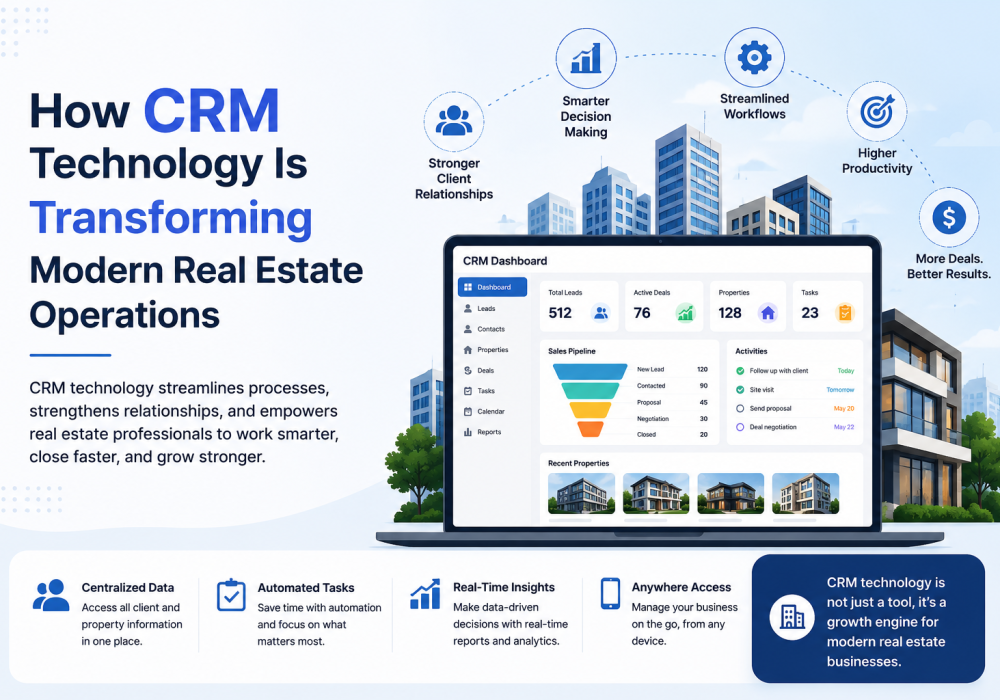
How CRM Technology Is Transforming Modern Real Estate Operations
The real estate industry has become increasingly digital, and businesses today need efficient ways to manage leads, properties, clients, and daily operations. As the number of inquiries and property transactions grows, managing everything through spreadsheets, emails, and separate applications can quickly become complicated. This is where a centralized customer relationship management solution can make a meaningful difference.
HiBroker is one example of a platform designed to help real estate professionals organize their sales and property-related activities in one place. By bringing important information together, businesses can improve coordination, respond to prospects faster, and create a more organized workflow.
Better Lead Management
Lead management is one of the biggest challenges for real estate businesses. A company may receive inquiries through its website, property portals, social media, phone calls, and other marketing channels. If these leads are not properly recorded and followed up, potential opportunities can easily be missed.
A real estate CRM helps businesses collect and organize prospect information from different sources. Agents can maintain details such as contact information, property preferences, budget, location requirements, and previous interactions. Having this information available in one place makes it easier for sales teams to understand each prospect and determine the appropriate next step.
HiBroker can also help teams maintain a structured approach to lead handling. Instead of relying on individual notes or spreadsheets, agents can work with centralized information and keep track of their ongoing conversations and activities.
Organizing Property Information
Real estate companies often deal with numerous properties at the same time. Every listing can have different details, including location, price, size, availability, images, amenities, and documentation. Keeping these details updated across multiple files can be time-consuming.
A real estate CRM system can provide a central location for managing property and client information. Agents can search and access relevant details when speaking with customers, helping them provide faster and more accurate responses.
For growing businesses, this type of organization can be particularly useful. When several employees work with the same property inventory, a centralized platform helps ensure that everyone has access to updated information.
Improving Client Communication
Successful real estate transactions depend heavily on communication. Buyers, sellers, tenants, landlords, and investors may have different requirements and expectations. Keeping track of every conversation becomes difficult when communication happens across multiple channels.
CRM technology allows businesses to maintain a history of client interactions, notes, follow-ups, and requirements. Before contacting a prospect, an agent can review previous information and continue the conversation without asking the customer to repeat basic details.
This can create a more professional customer experience. Platforms such as HiBroker can support real estate teams by helping them keep important customer and property information organized, making communication more consistent across the sales process.
Automating Repetitive Activities
Real estate professionals spend a significant amount of time on repetitive administrative work. Entering lead information, setting reminders, updating lead stages, scheduling follow-ups, and preparing reports can take valuable time away from sales activities.
Automation can simplify many of these routine processes. A CRM platform can help teams create reminders, assign leads, track activities, and monitor different stages of a sales pipeline. This means agents can spend more time interacting with customers instead of managing administrative tasks manually.
For managers, automation also creates greater visibility into the team's workflow. They can identify pending follow-ups and make sure important leads are not left unattended.
Supporting Property Management
Managing properties involves more than finding buyers or tenants. Property managers may need to maintain information about owners, tenants, leases, maintenance requests, payments, and important dates.
A property management CRM can help organize these records and make information easier to access. Instead of maintaining separate documents for every property and contact, businesses can create a more centralized workflow.
This can be especially useful for companies managing multiple properties. Team members can coordinate tasks more efficiently, while managers can keep track of important activities and responsibilities.
Tracking Business Performance
Data plays an important role in modern real estate decision-making. Managers need to understand where leads are coming from, which agents are performing well, how many inquiries are converting, and which marketing channels are generating results.
A CRM can provide useful reports and dashboards to help answer these questions. Businesses can monitor lead sources, sales stages, follow-up activities, and conversion performance.
For example, if a marketing campaign generates many inquiries but very few successful transactions, management can review the sales process and identify potential problems. Similarly, successful lead sources can receive more attention and investment.
Choosing the Right Solution
Every real estate business has different requirements. A small brokerage may need basic lead management and follow-up features, while a larger organization may require advanced automation, reporting, integrations, and property management capabilities.
Before selecting a platform, businesses should consider factors such as ease of use, scalability, customization, mobile accessibility, reporting, integrations, and data security. The solution should support the company's existing processes rather than creating unnecessary complexity.
HiBroker can be considered by real estate businesses looking for a more structured way to manage their sales and property operations. The right technology can help teams save time while maintaining better visibility across their daily activities.
Creating a More Efficient Future
Technology is becoming an important part of the real estate industry, but relationships remain at the center of every successful transaction. CRM technology should therefore be viewed as a tool that supports agents rather than replaces personal communication.
A real estate CRM system can bring leads, properties, customer interactions, tasks, and reporting into a more organized workflow. When these processes are managed effectively, teams can respond faster and reduce the chances of missing valuable opportunities.
For businesses that also handle ongoing property operations, a property management CRM can provide additional structure by keeping property-related information and activities easier to manage.
Ultimately, the value of CRM technology comes from how effectively a business uses it. With the right platform, clear processes, and consistent follow-ups, real estate companies can improve productivity, strengthen customer relationships, and create a smoother experience for everyone involved
Posted
2 months ago by Manish
Leave a Reply